

A recent article in Waste Today highlights the rapid growth and investment potential within the industrial and specialty waste sector. This trend underscores the increasing importance of innovative waste management solutions. For Wastebits, a company focused on sustainable waste management technologies, this is a convenient opportunity to address the evolving needs of the industry.
The concept of special waste management is no longer a niche concern for many organizations—it’s a necessity. As industries expand and regulations tighten, businesses are tasked with finding effective ways to handle unique waste streams that require specialized attention.
“People don’t want landfills, they don’t want incineration, they don’t want waste in general, so what do we do? We have to find other homes for this waste. We’ve found a number of models that are very creative to find resource streams in that waste and pull it out, monetize it and make it circular, and we think there are more to come.”
–Glen Roscoe, managing director at Stonepeak
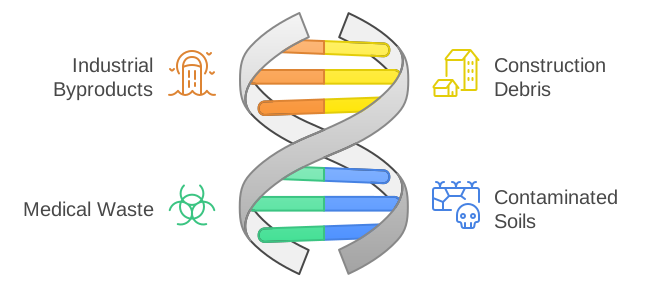
Special waste management goes beyond the standard disposal of everyday materials. It involves dealing with complex byproducts, such as industrial residues, contaminated soils, and medical or construction waste, each with its own set of challenges and regulatory requirements. Successfully managing these waste streams demands innovative strategies, a commitment to sustainability, and a firm grasp of emerging trends.
Understanding Special Waste Management
Special waste refers to materials that require distinct handling, transportation, and disposal methods due to their unique characteristics, potential hazards, or regulatory requirements. Unlike general waste, which often follows a straightforward path to recycling or disposal, special waste demands a higher level of scrutiny and expertise.
What Qualifies as Special Waste?
Special waste encompasses a broad range of materials, including but not limited to:
- Industrial Byproducts: Residual materials from manufacturing processes, such as sludges, spent solvents, or chemical wastes.
- Construction and Demolition Debris: Contaminated building materials, asbestos, and treated wood.
- Medical and Pharmaceutical Waste: Expired medications, sharps, and biohazardous materials.
- Contaminated Soils: Soil impacted by hazardous substances, often from industrial clean-up sites.
These materials often require unique containment, specialized transportation, and facilities equipped to safely treat or dispose of them.
Why Special Waste Management is Different
Managing special waste presents distinct challenges:
- Regulatory Compliance: Special waste is often subject to strict regulations, such as the EPA’s Resource Conservation and Recovery Act (RCRA), which governs hazardous waste.
- Environmental Impact: Without proper management, special waste can lead to significant environmental harm, such as soil and water contamination.
- Operational Complexity: Handling and documenting special waste involves additional steps, from classifying the waste correctly to ensuring safe transport to disposal facilities.
As a result, businesses generating special waste must adopt more advanced strategies to ensure safety, compliance, and sustainability in their operations. Understanding these nuances is the first step toward mastering special waste management and aligning with industry best practices.
Key Trends Driving the Growth of Special Waste Management
The increasing focus on sustainability and regulatory compliance has brought special waste management into sharper focus across industries. Several key trends are shaping the evolution of this field, offering both challenges and opportunities for businesses.
1. Stricter Environmental Regulations
Governments and environmental agencies are enforcing more rigorous standards for waste management, particularly for hazardous and special waste streams. Laws like the EPA’s Resource Conservation and Recovery Act (RCRA) mandate detailed tracking and reporting, while state-specific regulations may impose additional requirements. Non-compliance carries significant penalties, driving companies to prioritize more robust waste management practices.
2. Emphasis on Sustainability
Sustainability is no longer just a buzzword; it’s a business imperative. Companies are seeking ways to minimize landfill use, reduce greenhouse gas emissions, and adopt circular economy principles. Special waste, which often includes materials that are difficult to process, presents a unique opportunity for innovation—whether through waste-to-energy programs, recycling, or repurposing byproducts.
3. The Role of Technology
Digital tools are transforming how businesses handle special waste. Platforms that track waste from generation to disposal are streamlining compliance and improving transparency. Integration with systems like the EPA’s e-Manifest allows for real-time tracking, reducing paperwork and the risk of errors. These technologies not only enhance efficiency but also provide valuable data insights to optimize operations.
4. Corporate ESG Goals
Environmental, Social, and Governance (ESG) initiatives are becoming a priority for businesses seeking to enhance their reputation and attract investors. Transparent and responsible special waste management is a key component of ESG strategies, as it demonstrates a company’s commitment to environmental stewardship and regulatory compliance.
5. Industrial Expansion
As industries grow, the volume of special waste generated increases. Sectors like manufacturing, healthcare, and construction are producing more complex waste streams, necessitating innovative approaches to manage them effectively. Businesses that proactively address these growing demands are better positioned to stay competitive.
6. Public Awareness and Stakeholder Expectations
Consumers, investors, and other stakeholders are increasingly aware of environmental issues and expect businesses to act responsibly. Transparent waste management practices, particularly for special waste, can enhance a company’s reputation and build trust with its audience.
Preparing for the Future of Special Waste Management
The rapid evolution of special waste management reflects the growing demands of an industrial landscape that prioritizes sustainability, compliance, and innovation. From stricter regulations to the push for circularity and the adoption of cutting-edge technologies, businesses must adapt to these shifts to remain competitive and responsible.
Navigating these challenges requires more than just meeting regulatory requirements—it demands a proactive, strategic approach to waste management. By leveraging tools and expertise that streamline processes, enhance transparency, and integrate sustainability goals, companies can turn the complexities of special waste into opportunities for growth.

Navigating these challenges demands a proactive, strategic approach to waste management.
At Wastebits, we understand the unique challenges of managing special waste. Our solutions are designed to simplify waste tracking, ensure compliance with local and federal regulations, and align with your sustainability objectives. With a focus on innovative strategies like waste-to-energy programs and integrated digital systems, we empower businesses to manage special waste efficiently and responsibly.
Are you ready to elevate your special waste management strategy? Contact Wastebits today to explore how our specialized solutions can help your business stay ahead in this growing industry. Let’s work together to transform waste challenges into sustainable success.


