

Environmental, Social, and Governance (ESG) reporting is no longer just a buzzword—it’s a business imperative for manufacturers. With increasing pressure from investors, regulators, and consumers, manufacturing companies must demonstrate transparency, accountability, and sustainability in their operations. But what exactly does ESG reporting entail, and why does it matter for manufacturers?
Manufacturers are expected to track and report their environmental impact, labor practices, and corporate governance policies. This includes everything from waste management and carbon emissions to employee safety and ethical supply chain sourcing. Governments worldwide are enacting stricter ESG regulations, while major corporations and institutional investors demand sustainability commitments from suppliers.
Beyond compliance, ESG reporting offers manufacturers a competitive advantage. Companies that prioritize sustainability can unlock cost savings, improve operational efficiency, and enhance brand reputation—all while reducing risks associated with environmental liabilities and regulatory penalties.
What is ESG Reporting & Why is it Critical for Manufacturers?
ESG reporting refers to the measurement, tracking, and disclosure of a company’s Environmental, Social, and Governance (ESG) performance. For manufacturers, ESG reporting is more than just a compliance requirement—it’s a strategic tool that helps businesses enhance sustainability, mitigate risks, and strengthen stakeholder trust.

Breaking Down ESG in Manufacturing
Manufacturers operate in resource-intensive industries, making their ESG impact particularly significant. Understanding the three pillars of ESG reporting is essential for crafting an effective strategy:
1. Environmental (E): Managing Waste, Emissions, and Sustainability
Manufacturers must track and reduce their environmental footprint, which includes:
- Waste generation and disposal – Properly managing industrial waste and increasing recycling efforts.
- Carbon emissions (Scope 1, 2, and 3) – Measuring direct emissions from production (Scope 1), energy consumption (Scope 2), and supply chain impact (Scope 3).
- Water and energy usage – Optimizing resource consumption to cut costs and improve efficiency.
- Sustainable sourcing – Using environmentally friendly raw materials and adopting circular economy practices.
2. Social (S): Workforce, Safety, and Ethical Sourcing
The social component of ESG focuses on a manufacturer’s impact on employees, communities, and supply chain ethics. Key areas include:
- Workplace safety – Reducing accidents and ensuring OSHA compliance.
- Equity and inclusion – Promoting fair labor practices and equal opportunities.
- Human rights in the supply chain – Preventing unethical labor practices, including child labor and unsafe working conditions.
- Community engagement – Supporting local economies and contributing to sustainability initiatives.
3. Governance (G): Corporate Ethics, Compliance, and Transparency
Strong governance ensures accountability and ethical decision-making within manufacturing organizations. ESG reporting in this area includes:
- Regulatory compliance – Adhering to local, national, and international environmental laws.
- Board oversight and executive accountability – Implementing policies that align leadership decisions with sustainability goals.
- Anti-corruption policies – Preventing unethical business practices and financial misconduct.
- Data security and cybersecurity – Protecting sensitive operational and consumer information.
Why ESG Reporting is Critical for Manufacturers
Manufacturers are under increasing scrutiny from regulators, investors, and customers who demand ESG transparency. The industry’s reliance on raw materials, large-scale production, and complex supply chains makes it a major focus for sustainability efforts.
Key reasons why ESG reporting matters:
- Regulatory Pressure is Rising – Governments worldwide are enacting stricter sustainability and emissions regulations.
- Investors Favor ESG-Compliant Companies – ESG transparency attracts capital and reduces financial risks.
- Supply Chain Expectations are Growing – Large corporations require ESG data from their manufacturing partners.
- Sustainability Boosts Brand Reputation – ESG leadership enhances consumer trust and competitive positioning.
By embracing ESG reporting, manufacturers can stay ahead of compliance requirements, improve operational efficiency, and gain a competitive edge in an increasingly sustainability-driven market.
In the next section, we’ll explore the growing regulatory landscape shaping ESG reporting in the manufacturing industry.
The Growing Regulatory Landscape for ESG Reporting
As ESG reporting gains momentum, governments, regulatory agencies, and financial institutions are implementing stricter sustainability disclosure requirements—especially for manufacturers, whose environmental and social impact is significant. Companies that fail to comply with these regulations risk financial penalties, loss of investor confidence, and exclusion from key supply chains.
Key ESG Regulations Affecting Manufacturers
Manufacturers operating in the U.S., Europe, and beyond must stay ahead of evolving ESG requirements. Below are some of the most impactful regulations shaping the industry:
1. U.S. SEC Climate Disclosure Rules
The U.S. Securities and Exchange Commission (SEC) is finalizing rules requiring public companies to disclose their climate-related risks and greenhouse gas (GHG) emissions, including:
- Scope 1 emissions (direct emissions from owned or controlled sources).
- Scope 2 emissions (indirect emissions from purchased energy).
- Scope 3 emissions (emissions from the entire value chain, including suppliers and customers).
For manufacturers, this means tracking emissions across production, transportation, and supply chain operations to meet investor and regulatory demands.
2. EU Corporate Sustainability Reporting Directive (CSRD)
The European Union’s CSRD significantly expands ESG reporting requirements for companies operating in or doing business with the EU. It mandates:
- Comprehensive ESG disclosures, including environmental impact, human rights, and governance policies.
- Third-party verification of sustainability data to ensure accuracy.
- Supply chain transparency, requiring manufacturers to report on the sustainability of their suppliers.
Failure to comply can result in substantial fines and restricted access to the European market.
3. California’s Climate Corporate Data Accountability Act
California’s SB 253 and SB 261 require companies with over $1 billion in revenue to publicly disclose their carbon footprints, including:
- Scope 1, 2, and 3 emissions reporting.
- Climate-related financial risks and mitigation plans.
As California often sets the stage for broader U.S. regulations, manufacturers should prepare for similar state and federal laws in the near future.
4. International Sustainability Standards (ISSB, GRI, TCFD)
Global frameworks such as the International Sustainability Standards Board (ISSB), Global Reporting Initiative (GRI), and Task Force on Climate-related Financial Disclosures (TCFD) are shaping ESG reporting best practices.
- Many companies voluntarily adopt these standards to align with investor expectations.
- Standardized ESG metrics make it easier to benchmark performance and improve sustainability practices.
How These Regulations Impact Manufacturers
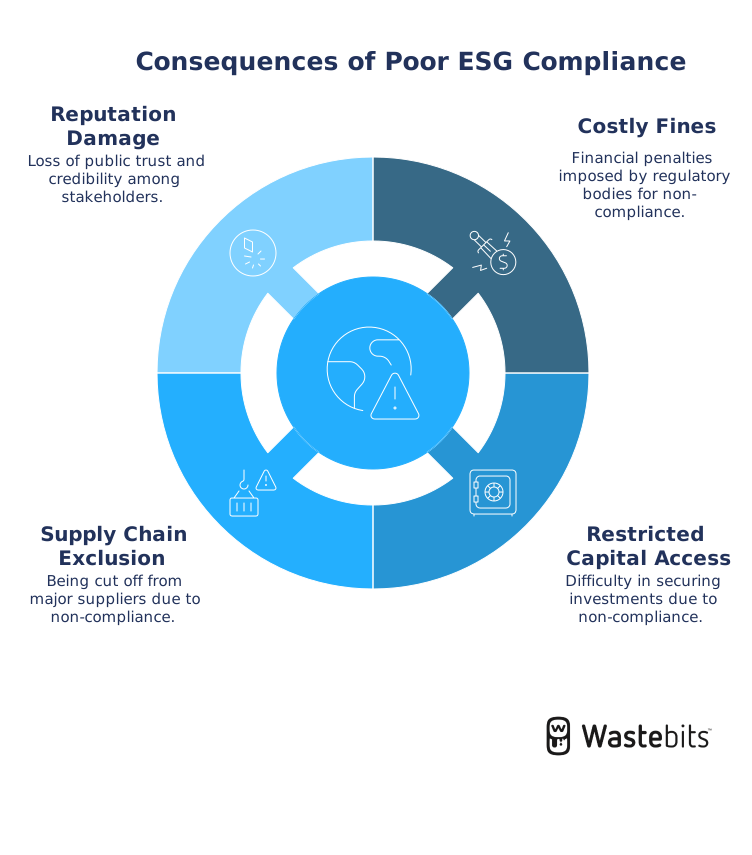
With ESG regulations becoming more stringent, manufacturers must proactively track, measure, and report their ESG data to avoid:
- Costly non-compliance fines from regulatory bodies.
- Restricted access to capital, as investors prioritize ESG-compliant companies.
- Supply chain exclusion, as major corporations demand ESG data from suppliers.
- Reputation damage, as stakeholders expect transparency and sustainability commitments.
Taking a Proactive Approach to ESG Compliance
Instead of waiting for regulations to become mandatory, forward-thinking manufacturers are adopting ESG best practices now. In the next section, we’ll explore the key benefits of ESG reporting and how manufacturers can turn compliance into a competitive advantage.Key Benefits of ESG Reporting for Manufacturers
While ESG reporting is often viewed as a regulatory necessity, it also provides tangible business benefits for manufacturers. Companies that take a proactive approach to ESG not only avoid compliance risks but also gain a competitive edge, improve operational efficiency, and enhance their brand reputation.
1. Strengthening Regulatory Compliance
- ESG regulations are becoming more stringent, and manufacturers that fail to comply risk heavy fines and legal consequences.
- By integrating ESG tracking and reporting into daily operations, companies can stay ahead of regulatory changes and avoid last-minute compliance scrambles.
- Proactively disclosing ESG data builds trust with regulatory bodies and ensures smoother audit processes.
2. Improving Operational Efficiency and Cost Savings
- ESG reporting requires businesses to track key resource consumption metrics, such as energy use, water usage, and waste production.
- Identifying inefficiencies through ESG data can lead to significant cost reductions by optimizing energy consumption, material sourcing, and waste management.
- Manufacturers that focus on waste reduction and circular economy practices can turn byproducts into revenue streams rather than disposal costs.
3. Enhancing Brand Reputation and Customer Trust
- Consumers and corporate buyers increasingly prefer to do business with environmentally and socially responsible manufacturers.
- Transparent ESG reporting demonstrates a commitment to sustainability and corporate responsibility, which can attract new customers and strengthen brand loyalty.
- Many major brands now require their suppliers to meet ESG performance standards, making compliance a key factor in maintaining business relationships.
4. Gaining a Competitive Advantage in the Market
- Investors and financial institutions favor companies with strong ESG performance, as they are seen as lower risk and better positioned for long-term growth.
- Manufacturers that align with sustainability-focused supply chains gain access to preferred vendor lists and exclusive contracts.
- Companies with solid ESG data can differentiate themselves in competitive bidding situations, particularly for government and enterprise-level contracts that prioritize sustainability.
5. Reducing Supply Chain and Business Risks
- ESG reporting helps manufacturers identify vulnerabilities in their supply chains, such as reliance on unsustainable raw materials or high-emission logistics.
- Strong governance policies reduce the risk of compliance violations, lawsuits, and reputational damage.
- Companies with clear ESG strategies are better prepared to adapt to climate-related disruptions, new regulations, and shifts in market demand.
Turning ESG Reporting into a Business Opportunity
ESG reporting is more than just a compliance task—it’s a chance for manufacturers to reduce costs, attract investors, and build a more sustainable business model. By embedding ESG principles into operations, companies can future-proof their businesses while meeting the expectations of regulators, customers, and stakeholders.
In the next section, we’ll outline key steps for manufacturers to implement an effective ESG reporting strategy and ensure long-term success.
Conclusion: Making ESG Reporting Work for Manufacturers
ESG reporting is no longer optional for manufacturers—it’s a business necessity. As regulations tighten and stakeholders demand greater transparency, companies that embrace ESG reporting now will be better positioned for long-term success. Beyond compliance, a well-executed ESG strategy can lead to cost savings, operational efficiency, risk reduction, and stronger brand reputation.
Manufacturers that take a proactive approach to ESG reporting can turn sustainability into a competitive advantage by:
- Staying ahead of regulatory changes and avoiding compliance risks.
- Reducing waste, emissions, and energy costs through smarter resource management.
- Building trust with customers, investors, and business partners by demonstrating sustainability commitments.
- Gaining access to new markets and contracts that require ESG transparency.
At Wastebits, we help manufacturers streamline ESG reporting by providing digital waste tracking and sustainability data solutions. Our platform makes it easy to monitor waste streams, measure environmental impact, and generate reports that align with ESG frameworks—helping you stay compliant while improving efficiency.
Take the Next Step in Your ESG Journey
If your company is looking to simplify ESG reporting and optimize sustainability efforts, Wastebits can help.
Contact us today to learn how our solutions can support your ESG goals and drive measurable results.

Stay Ahead of the Game
Get the Monthly Waste & Sustainability Newsletter
Don't miss out on our latest news and offers.
Subscribe today. Unsubscribe anytime.


