

Traditional waste disposal methods, such as landfilling and incineration, are no longer sufficient to address the growing environmental concerns and the urgent need to conserve resources. Enter Alternative Engineered Fuels (AEFs)—an innovative solution that transforms non-recyclable waste into a valuable energy source.
AEFs represent more than just a waste management strategy; they embody a shift toward a circular economy where materials are repurposed to create new value. By converting waste into fuel, businesses and industries are not only reducing their environmental footprint but also tapping into economic opportunities that make their operations more sustainable and cost-efficient.
What Are Alternative Engineered Fuels?
At their core, Alternative Engineered Fuels (AEFs) are a cutting-edge solution designed to repurpose non-recyclable waste into a valuable energy source. These fuels are meticulously crafted from materials that cannot be processed through traditional recycling methods, such as certain plastics, textiles, and industrial residues. Instead of ending up in a landfill, these materials are transformed into a clean-burning fuel that can power industries and reduce reliance on fossil fuels.
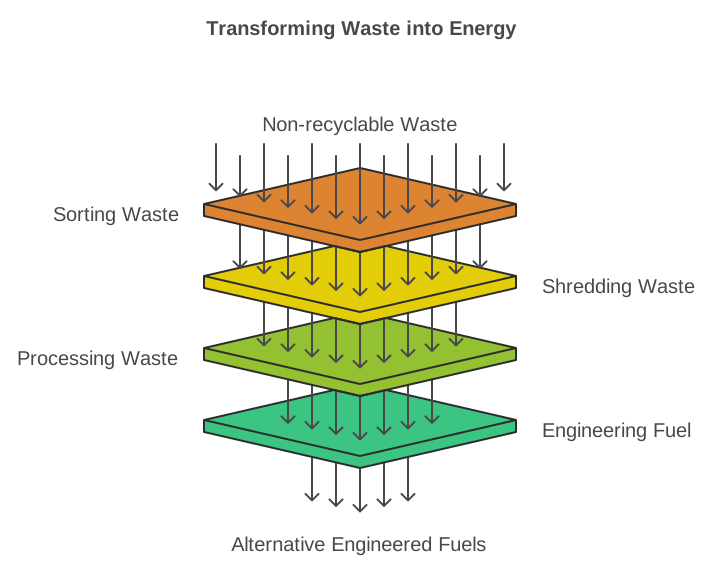
The process of creating AEFs involves sorting, shredding, and processing waste to remove contaminants and ensure consistency. The resulting fuel is engineered to meet specific energy requirements, making it suitable for high-energy industrial applications such as cement kilns, power plants, and manufacturing facilities. This tailored approach allows AEFs to serve as a reliable substitute for conventional fuels while addressing the challenges of waste disposal.
AEFs exemplify a win-win scenario: they reduce the environmental burden of waste while providing a renewable energy source for industries. By leveraging materials that would otherwise go unused, AEFs help bridge the gap between sustainability goals and operational efficiency. As industries look for innovative ways to manage waste, AEFs stand out as a forward-thinking, practical solution.
Environmental Benefits of Alternative Engineered Fuels
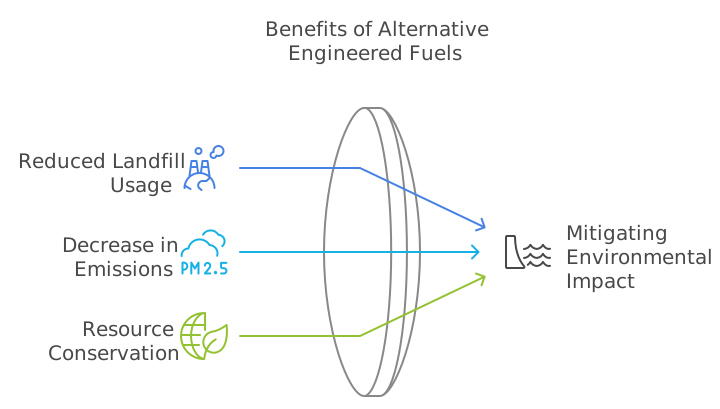
One of the most significant advantages of Alternative Engineered Fuels (AEFs) is their potential to mitigate environmental impact. By transforming non-recyclable waste into energy, AEFs address critical environmental challenges such as landfill overuse, greenhouse gas emissions, and resource depletion.
Reducing Landfill Dependency
AEFs play a vital role in diverting waste from landfills, where materials often take decades—or even centuries—to break down. Non-recyclable waste, such as certain plastics or mixed industrial materials, would traditionally end up in landfills, contributing to soil contamination and methane emissions. Instead, these materials are processed into AEFs, significantly decreasing the volume of waste that requires disposal and extending the lifespan of landfill facilities.
Lowering Greenhouse Gas Emissions
AEFs also contribute to reducing greenhouse gas emissions by replacing traditional fossil fuels like coal or oil. Fossil fuels release substantial amounts of carbon dioxide and other pollutants into the atmosphere when burned, exacerbating climate change. AEFs, on the other hand, are designed to burn cleaner and produce fewer emissions. Additionally, by utilizing waste that would otherwise decompose and emit methane in landfills, AEFs help curb one of the most potent greenhouse gases.
Promoting a Circular Economy
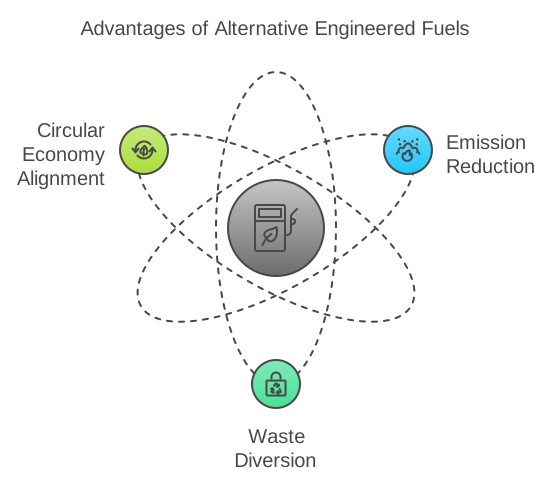
AEFs embody the principles of a circular economy, where waste is not viewed as a final output but as a resource that can be reintegrated into the economy. This shift from a linear model—produce, consume, discard—to a circular approach reduces the need for virgin materials, conserves energy, and minimizes environmental degradation.
Minimizing Environmental Harm
Certain types of waste, such as industrial residues or contaminated materials, can pose significant environmental risks if not managed properly. Through the AEF process, these materials are carefully processed, neutralizing harmful substances and preventing them from leaching into ecosystems.
In an era where industries are increasingly scrutinized for their environmental footprint, AEFs offer a tangible way to achieve sustainability goals while addressing pressing waste management challenges. By integrating AEFs into their operations, businesses not only reduce their environmental impact but also align with global efforts to combat climate change and protect natural resources.
How Are Alternative Engineered Fuels Different from Waste-to-Energy?
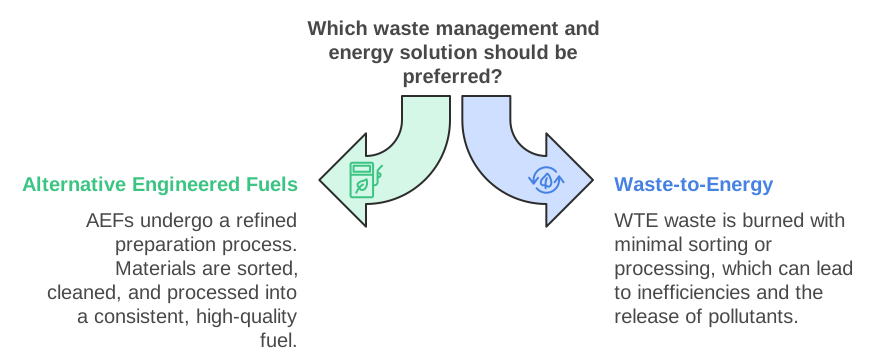
While Alternative Engineered Fuels (AEFs) and Waste-to-Energy (WTE) share the common goal of converting waste into usable energy, they are fundamentally different in their processes, applications, and environmental impact. Understanding these distinctions highlights why AEFs are gaining traction as a preferred waste management and energy solution for businesses and industries.
Processing and Preparation
Waste-to-Energy systems typically involve the direct combustion of mixed waste to generate electricity or heat. This means that waste is burned with minimal sorting or processing, which can lead to inefficiencies and the release of pollutants, depending on the type of waste being incinerated.
In contrast, AEFs undergo a more refined preparation process. Non-recyclable waste materials are sorted, cleaned, and processed into a consistent, high-quality fuel. This engineered approach ensures that AEFs meet specific energy requirements and burn cleaner than the raw waste used in traditional WTE systems.
Application and Versatility
WTE facilities are typically large-scale plants designed to generate electricity or heat for municipal or regional use. These facilities require significant infrastructure and are often limited to specific geographic areas.
AEFs, on the other hand, are versatile fuels that can be used in a variety of industrial settings, such as cement kilns, power plants, and manufacturing facilities. They offer a scalable solution that doesn’t rely on centralized infrastructure, making them accessible for industries worldwide.
Environmental Impact
One of the primary criticisms of WTE systems is the release of pollutants, including greenhouse gases and particulate matter, during the combustion process. While modern WTE plants employ advanced technologies to reduce emissions, they still face challenges in achieving the same environmental benefits as AEFs.
AEFs, being pre-processed and designed for cleaner combustion, produce fewer emissions when burned. By targeting non-recyclable materials and removing contaminants during production, AEFs minimize the release of harmful substances into the environment. Additionally, AEFs help close the loop in waste management by diverting materials from landfills and aligning with circular economy principles.
Focus on Non-Recyclable Waste
WTE systems often handle mixed waste streams, including materials that could potentially be recycled. This approach can lead to inefficiencies and a missed opportunity to maximize resource recovery.
AEFs are specifically designed to target non-recyclable waste—materials that cannot be processed through conventional recycling methods. By focusing on this subset of waste, AEFs complement recycling efforts rather than competing with them, ensuring that valuable resources are reused wherever possible.
Energy Efficiency
AEFs are engineered to provide consistent and reliable energy output tailored to industrial applications. This contrasts with WTE systems, which can experience variability in energy production due to the inconsistent nature of mixed waste streams. The precision of AEF production ensures greater efficiency and predictability in energy use.
Conclusion: Turning Waste into Opportunity with Wastebits’ Sustainability Initiatives
The rise of Alternative Engineered Fuels (AEFs) demonstrates how innovation can transform waste into a powerful tool for environmental and economic progress. By reducing landfill dependency, lowering greenhouse gas emissions, and creating value from non-recyclable materials, AEFs are paving the way for a more sustainable future. Yet, they are just one example of how waste can be reimagined into opportunity.
At Wastebits, we are committed to helping businesses achieve their sustainability goals through innovative waste management solutions. One such initiative is our PPE Recovery Program, which creates valuable fuels from discarded personal protective equipment (PPE). This program reduces landfill dependency, prevents harmful emissions from decomposition, and recovers energy that can be used for electricity or heating. It’s a prime example of how our approach aligns with the principles of AEFs—turning waste into worth.
Beyond PPE recovery, Wastebits offers a suite of sustainability programs designed to help organizations minimize environmental impact and maximize operational efficiency. From bulk universal waste recycling to industrial waste solutions, our tailored services empower businesses to take actionable steps toward achieving their ESG (Environmental, Social, and Governance) goals.
Ready to transform your waste into opportunity? Contact Wastebits today to learn how our sustainability initiatives can help your organization turn challenges into achievements. Together, we can create a future where waste isn’t a problem—it’s a solution.

Stay Ahead of the Game
Get the Monthly Waste & Sustainability Newsletter
Don't miss out on our latest news and offers.
Subscribe today. Unsubscribe anytime.


