

Diesel prices are rising fast, and for waste generators that usually means fuel surcharges are not far behind. Recent reporting showed U.S. diesel climbing about 22% to 23% in roughly a week, pushing national averages into the mid-$4 range, with some analysts warning it could move higher if oil-market disruption continues.
For many facilities, this is where waste costs start to get confusing. Waste volumes may not have changed. Your vendor list may not have changed. Pickup frequency may not even have changed yet. But transportation is built into almost every part of waste handling, from container swaps to hazardous waste pickups to LTL moves to emergency service calls. When diesel spikes, those costs start working their way through the system quickly, and waste generators often feel the increase before they have had time to adjust.
That is why this is a good moment to stop thinking about fuel surcharges as somebody else’s problem. If your waste program depends on trucks, and most do, diesel prices matter to your budget whether you are shipping one pallet a month or managing a large multi-site program.
Why Diesel Prices Matter So Much to Waste Generators
Most industrial and commercial waste programs are more transportation-dependent than they look on paper. Even when the invoice is labeled as hauling, service, disposal, or freight, a diesel-powered truck is usually part of the chain. That includes front-load and roll-off service, drum pickups, universal waste shipments, lab pack transportation, brokered moves, and LTL freight for specialty recycling or recovery programs.
That is what makes diesel different from a general cost headline. It is not just another macroeconomic data point. It is a direct operating input for the logistics behind waste removal and waste recovery.
Recent reporting has made that clear. CNN noted that diesel rose much faster than gasoline and hit about $4.60 per gallon, while Transport Topics reported diesel at about $4.65 with a 23% jump since the conflict began. The Washington Post reported the national average even higher at $4.78 and noted that if disruption lasts, diesel could test the highs reached in 2022.
For waste generators, the practical takeaway is simple: this is not just about what happens at the pump. It is about what happens on your next invoice, and the one after that.
Why Fuel Surcharges Tend to Rise Fast
Fuel surcharges are one of the quickest ways transportation providers recover rising diesel costs. Larger carriers often already have formulas tied to diesel benchmarks, and some update them weekly. CNN reported that major carriers were already increasing weekly fuel surcharges as diesel jumped.
That matters because waste generators sometimes assume all vendors react the same way. They do not. One hauler may have a transparent surcharge table built into its pricing. Another may adjust through a broader service fee. Another may wait until renewal and then present a steeper increase all at once. Some will pass through the cost quickly. Others will lag for a few weeks or months, then try to catch up.
There is a lag effect in trucking contracts, and some fuel surcharges are based on a 90-day average. That means the actual pain at the pump can show up in customer pricing after the initial spike, not necessarily at the same moment.
For waste teams, that delay can create a false sense of security. A stable invoice this month does not always mean the problem is minor. Sometimes it means the math has not fully hit yet.
Where Waste Programs Usually Feel the Pain First

Not every waste stream is affected equally. The first areas to feel pressure are usually the ones with the most transportation intensity or the least routing efficiency.
Small-quantity hazardous waste pickups are a common example. If a vendor is sending a truck for a relatively small load, the fuel component becomes more significant on a per-drum or per-pound basis. The same goes for specialty recycling moves, rural pickups, expedited service, and fragmented pickup patterns across multiple departments or sites.
LTL freight is another area where rising diesel can become obvious fast. When material is moving in smaller shipments instead of full, well-planned loads, fuel surcharges and accessorial costs tend to bite harder. That does not mean LTL is the wrong choice. It means the program needs to be managed carefully, with realistic scheduling, good consolidation habits, and a clear understanding of what is actually shipping and how often.
Multi-vendor waste programs are also vulnerable. When one site uses one vendor for drums, another for universal waste, another for cardboard, another for specialty recycling, and a separate provider for freight, fuel-related cost creep can get buried across multiple invoices. It is easy to miss the pattern because no single bill looks dramatic on its own. The total program cost tells a different story.
What You Can Still Control When Diesel Prices Rise
Many facilities drift into reactive shipping habits over time.
Waste generators cannot control geopolitical conflict, oil terminals, or crude markets. Recent reporting tied today’s diesel spike to larger disruptions in global oil supply, including threats to the Strait of Hormuz, attacks on ships, and terminal closures that pushed Brent crude above $100 at points this week.
But there are still real levers inside a waste program.
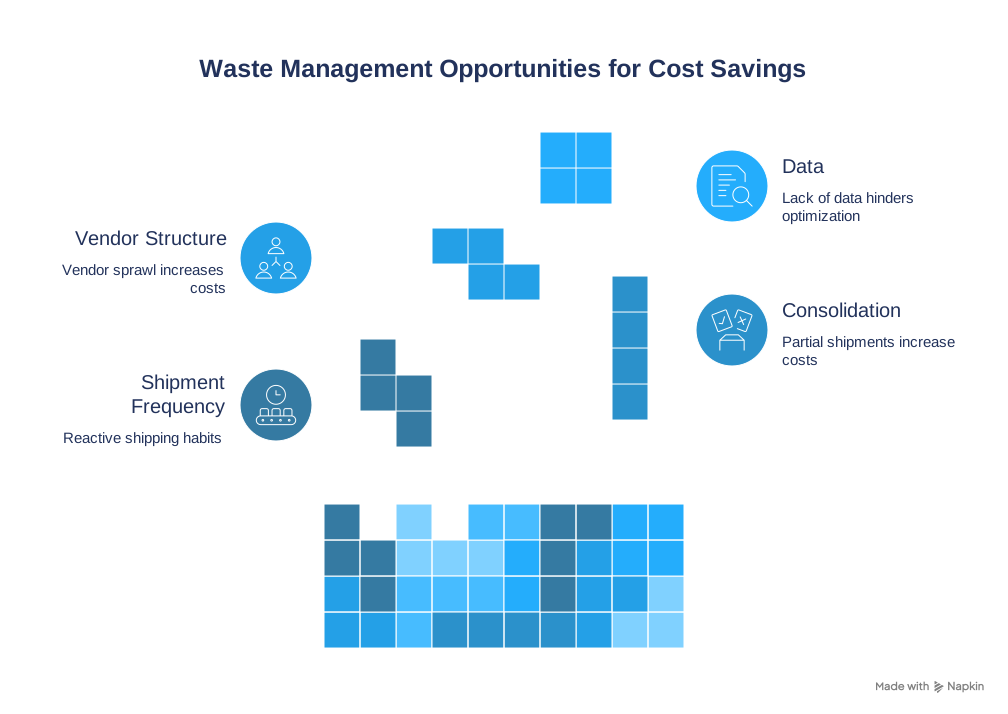
The first is shipment frequency. Many facilities drift into reactive shipping habits over time. Containers get swapped because they look full, not because the timing is optimized. Specialty materials move in smaller batches because no one has stepped back to ask whether a slightly different cadence would cut cost without creating compliance risk. When diesel is cheap, that inefficiency is easier to ignore. When diesel spikes, it gets expensive quickly.
The second is consolidation. If your program can safely and compliantly reduce the number of partial shipments, underfilled pickups, or redundant routes, you may be able to offset at least part of the surcharge pressure. This is especially important for recurring LTL moves, universal waste programs, and specialty recycling streams.
The third is vendor structure. Many waste programs carry more vendor sprawl than they realize. Different departments make decisions independently. One site uses a legacy local provider. Another uses a national account. Someone else arranged a one-off service that quietly became permanent. Rising diesel tends to expose those inefficiencies. When more vendors are touching more waste streams than necessary, cost visibility gets worse and routing gets less efficient.
The fourth is data. If your team does not have a clear view of manifests, service frequency, pickup history, waste volumes, and transportation patterns, it becomes much harder to push back on rising costs or redesign the program intelligently.
Why This Is Bigger Than One Month of High Fuel
Waste generators should not read the current moment as just a temporary billing annoyance. Even if oil prices ease later, sharp diesel moves expose weak points in waste programs that were already there.
Transport Topics reported that fuel prices account for 50% to 60% of the total operating cost of shipping goods by ship and noted that higher fuel prices cause slowdowns across shipping and logistics. The same story also pointed to rising fuel surcharges as carriers try to pass those costs through.
There is a lag effect in trucking contracts, and some fuel surcharges are based on a 90-day average.
That broader economic drag matters because waste programs do not exist in isolation. When fuel, freight, and inflation pressures rise together, EHS leaders and operations teams are asked to defend budgets more closely. That usually means more scrutiny on pickups, more scrutiny on vendor performance, and more pressure to explain why waste handling costs are moving faster than expected.
In other words, this is not only a transportation issue. It is also a visibility issue and a management issue.
Facilities that know their waste streams, understand their service patterns, and can document the reasons behind cost movement are in a much stronger position than facilities that are guessing.
How Wastebits Helps Waste Generators Control the Numbers They Can Control
This is where a more disciplined waste program starts to matter.
For organizations dealing with recurring freight needs, Wastebits’ LTL shipping services can help bring more structure and visibility to transportation decisions. When diesel is elevated, it becomes even more important to understand how materials are moving, whether shipments are timed well, and where small inefficiencies are quietly becoming expensive.
Wastebits’ sustainability services consulting can also help waste generators step back and reduce the number of shipments they need in the first place. In many facilities, the biggest savings opportunity is not negotiating a surcharge after the fact. It is reducing unnecessary moves, consolidating streams where appropriate, tightening vendor pipelines, and improving the way waste is staged, scheduled, and managed.
Just as important, Wastebits software gives teams better control over manifests, shipment records, waste stream activity, and vendor performance. That kind of visibility matters when you are trying to separate unavoidable market pressure from avoidable operational waste. If a pickup really needs to happen, the data should support it. If a vendor increase is justified, you should be able to see why. If shipment frequency has drifted over time, your team should be able to catch that before it becomes a major budget problem.
Diesel Is Up, but Waste Generators Still Have Options
When diesel prices jump this sharply, fuel surcharges are not a surprise. They are a logical outcome of a transportation network under pressure. Recent reporting shows that the rise has been fast, the global disruption behind it is real, and carriers are already adjusting to protect their margins.
But waste generators are not powerless here.
The companies that tend to handle moments like this best are the ones that look beyond the surcharge line itself. They review shipment frequency. They consolidate where they can. They reduce vendor sprawl. They manage freight more deliberately. And they use better waste and manifest data to control the parts of the equation that are actually within reach.
That is the real opportunity in a high-diesel environment. You may not be able to control the price of fuel, but you can control how efficiently your waste program responds to it. If your team wants to explore ways to improve freight execution, reduce avoidable shipments, optimize vendor pipelines, and gain better control over manifests and waste data, contact us to talk through Wastebits’ LTL shipping services, sustainability consulting, and waste tracking software.

Stay Ahead of the Game
Get the Monthly Waste & Sustainability Newsletter
Don't miss out on our latest news and offers.
Subscribe today. Unsubscribe anytime.


